
Why Winter Is the Best Time to Find Where Your Building Loses Heat

Updated: 5 days ago
As winter approaches and heating systems start working harder, heat escaping from a home or commercial building becomes money leaving the structure. Winter is Thermal Scan Season — colder weather provides the temperature contrast that helps aerial thermal imaging reveal potential heat-loss patterns across roofs and facades.
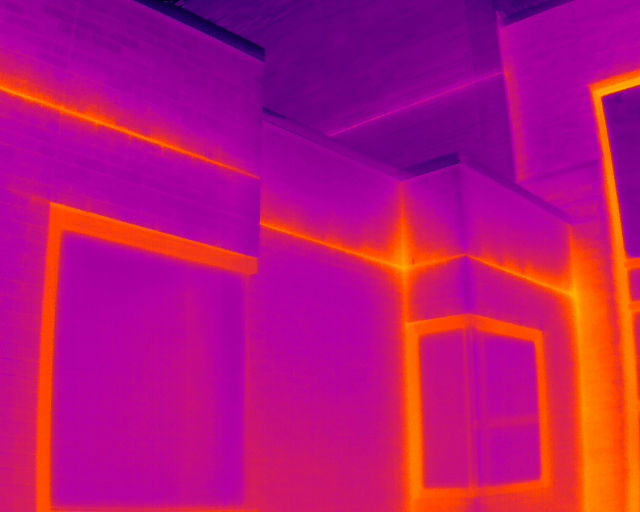
Why winter is a thermal case
Thermal inspection relies on a temperature difference, or delta-T, between the heated interior and the colder exterior. For insulation-performance inspections, a stable difference of at least 18°F is a common benchmark, ideally maintained for several hours before scanning. When that difference reaches 30°F or more, heat-loss patterns can become more pronounced, making potential deficiencies easier to distinguish — provided the weather, building materials, and inspection methods are suitable. A larger delta-T improves the opportunity to see problems; it does not replace proper inspection conditions.
What a scan finds
Missing or underperforming insulation, thermal bridging through structural components, and temperature patterns associated with air leakage can appear as anomalies across roofs and facades. These findings help identify places where the building envelope — the barrier between indoors and outdoors — may be allowing heating energy to escape. Thermal imaging shows surface-temperature patterns, not the defect itself, so an anomaly is a starting point for investigation rather than automatic proof of a leak.
Why it matters
Heat lost through the building envelope adds to the work the heating system must do to maintain indoor comfort. Thermal Scan Season is an opportunity to turn an unseen performance problem into a specific area to investigate, giving owners a more focused starting point for maintenance and repairs It can provide answers and raise questions at the same time: is that warm exterior area caused by missing insulation, air leakage, or an expected structural detail? Identifying the pattern early creates an opportunity to address the cause before it becomes a larger maintenance concern.
How it's done
The building maintains a stable indoor temperature while we use drone-based thermal imaging to scan accessible exterior roof and facade surfaces. Winter heat-loss scans are best planned around low wind, dry surfaces, and minimal residual solar heating — often overnight or before sunrise. Humidity, precipitation, indoor and outdoor temperatures, and recent weather are documented because conditions affect how the images should be interpreted. Snow-covered roofs can limit what an exterior scan can reveal.
Thermal scanning is non-destructive and can quickly cover accessible areas, making it a practical screening tool for directing follow-up work. Roof heat-loss scans should not be confused with roof-moisture scans: many moisture scans rely on daytime solar heating followed by nighttime cooling, so their ideal conditions differ from a winter envelope heat-loss scan. The method must match the question being asked.
Common questions
Why is winter useful for thermal inspections?
A heated building and cold outdoor air create the temperature difference that helps reveal insulation deficiencies and other heat-loss patterns. A stable delta-T of approximately 18°F is a common benchmark for insulation inspections; a difference of 30°F or more can make those patterns more distinct under suitable conditions.
Can thermal imaging find leaking HVAC?
It can help identify patterns associated with heated air escaping through the building envelope, along with insulation deficiencies that increase heating demand. That is different from directly testing HVAC equipment or ductwork for leaks. An envelope scan helps locate suspicious areas; confirming the cause may require an interior inspection, blower-door testing, or other targeted checks.
Can roofs and facades both be scanned?
Yes, where the materials, access, and environmental conditions support the inspection. Facades can reveal insulation and thermal-bridging patterns, while suitable roof assemblies can show heat-loss anomalies. Roof moisture detection is a separate application with its own weather requirements, and snow cover can prevent a useful view of the roof surface.
NEXT STEP
Have questions about heat loss or want to schedule an aerial thermal scan? Call ScenePhoto360 to discuss your roof or facade concerns and plan a scan around suitable weather conditions. For roof concerns, schedule soon—before snow cover limits what we can see. We’ll discuss what an aerial scan can help reveal and whether it fits your needs. To learn more about our aerial thermal imaging services, visit our thermal page.
MEET THE AUTHOR

Earl Bakke is a Level II Certified Thermographer and FAA Part 107 pilot with night-operations authorization. Twenty years in law enforcement and crash reconstruction, 450+ crash scene, building, home and thermal inspections, and testimony in criminal and civil proceedings. He founded ScenePhoto360 in Stillwater, Minnesota. Read the full background.


